


| Video Memory Specifications | ||
| Type | DDR3 | |
| Size | 2GB | |
| Resolution | HDMI: Max Resolution: 4096x2160 @24 Hz DVI: Max Resolution: 2560 x 1600 @60 Hz |
|
| Core Clock | 954 |
|
| Memory Clock | MEMORY SPEED: 1600 | |
| BUS Type | 64-bit |
|
| Memory Interface | PCI Express 2.0 x16 |
|
| Others | D-SUB CONNECTORS x 1 | |
| Interface | ||
| HDMI | HDMI 1.4a x 1 |
|
| DVI | Dual-link DVI-D x 1 |
|
| Power Specifications | ||
| Recommended PSU | 300 W |
|
| Consumption | 19 W | |
| Display Option | ||
| Multi Display | 2 | |
| Programming Interfaces | ||
| DirectX | 12 API | |
| OpenGL | 4.5 | |
| Physical Specifications | ||
| Dimensions | 146 x 69 x 19 mm | |
| Others | 178 g | |
| Warranty | ||
| Warranty | 03 years |
|
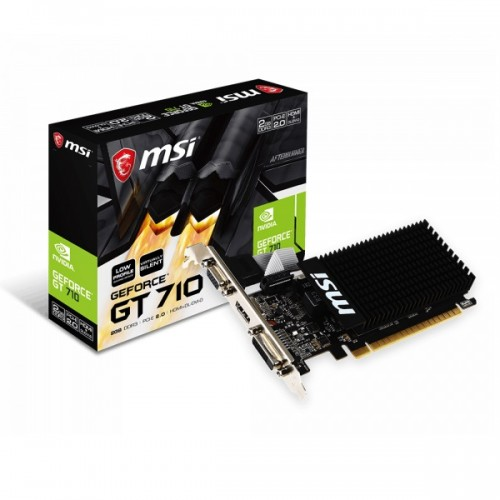
The MSI GT 710 2GD3H LP is a classic "utility" graphics card, designed not for modern triple-A gaming, but for reliability, multi-monitor support, and breathing life into older desktop systems. Based on NVIDIA’s Kepler architecture, this card is a staple for home theater PCs (HTPCs) and office workstations where silence and a low profile are the top priorities.
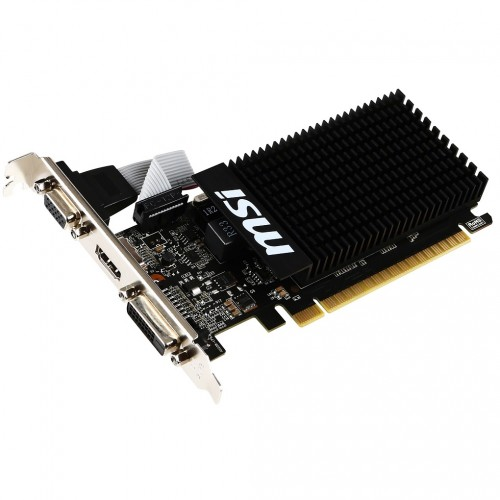
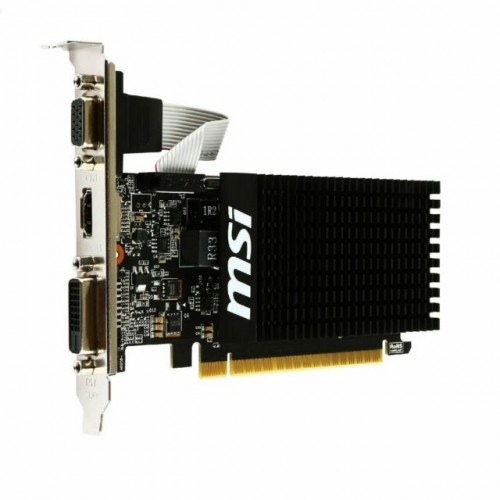
The standout feature of this specific MSI model is its heatsink-only cooling solution. Because it uses a massive passive radiator instead of a fan, it operates at 0dB, making it completely silent. This is perfect for quiet environments or media centers. Additionally, its Low Profile (LP) form factor and included brackets allow it to fit into extremely cramped "Small Form Factor" (SFF) cases often found in corporate environments (like Dell OptiPlex or HP ProDesk units).
Memory: 2GB of DDR3 memory.
Bus Width: 64-bit.
Core Clock: 954 MHz.
Power Consumption: A meager 19W TDP, meaning it requires no external power cables and can run on almost any factory power supply.
Connectivity and Use Cases
Despite its age, the card is surprisingly versatile with its output array:
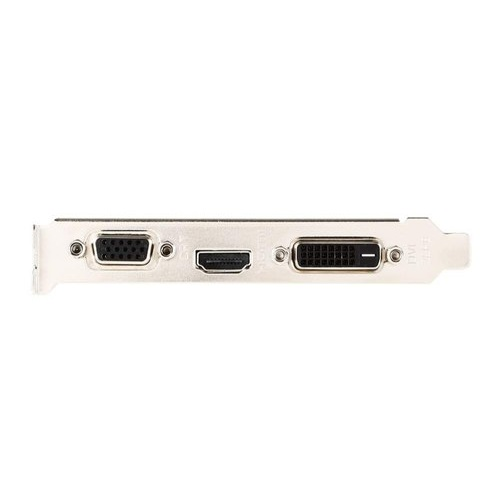
Dual-Link DVI-D
HDMI 1.4a (Supports 4K resolution at 30Hz)
D-Sub (VGA)
This allows for easy connection to legacy monitors and modern TVs alike. While it won't run Cyberpunk 2077, it is more than capable of handling 1080p video playback, casual titles like Roblox or Minecraft (on lower settings), and providing a significant UI snappiness upgrade over integrated graphics from the early 2010s.
Get specific details about this product from customers who own it.
