Core Benefits of the Processor
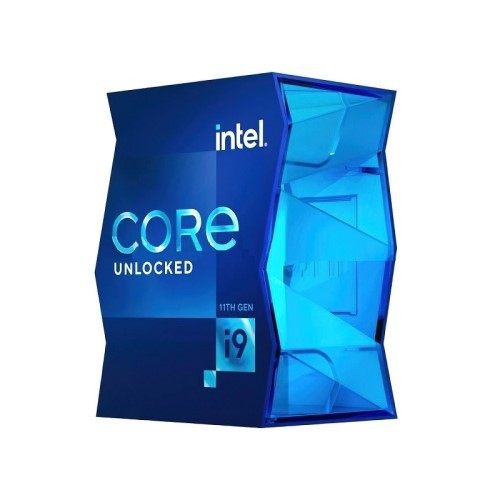
Intel 11th Generation Core i9-11900K Processor having the base frequency of 3.50 GHz that can be reached as max turbo frequency at 5.30 GHz. The processor has a compatibility socket of LGA 1200 that is supported by 400 and 500 series Intel
motherboards. It has a SmartCache of 16 MB containing 8 cores and 16 threads. With a bus speed of 8 GT/s, it has thermal design power (TDP) rating of 125W. This latest microchip has few expansion options such as 4.0 PCI express revision having configured up to 1×16, 2×8, 1×8+2×4, and a maximum of 20 lanes. Considering the memory this processor has a dual-channel of max 128GB of the size that supports up to DDR4-3200 bus speed.
Intel Core i9 11900K Review
We wish the
Intel Core i9-11900K was a larger upgrade. Just like the other processors in Intel’s 11th generation, it’s only received a small refresh to hold over those hoping for a big update. That’s not to say it doesn’t pack a punch because it does. You’ll be hard pressed to push it beyond its limits. But, it’s not going to get anyone excited or keep Intel at the top, particularly with all the great competition from AMD.
While processors like the AMD
Ryzen 9 5900X seem to break new ground, the Intel Core i9-11900K essentially uses 10nm Ice Lake architecture but in a 14nm process, so you end up with just an 8-core, 16-thread design. Though it’s managed to uphold Intel’s dominance when it comes to single-core performance, the competition outperforms it when it comes to multi-core performance. The only users that can really make the most of this CPU, especially considering its price, are gamers. this CPU could soon seem redundant, particularly considering the 12th-gen i9 could possibly.
Performance
Don’t get us wrong, the Intel Core i9-11900K is a fine processor. No matter what test we threw at the little chunk of silicon, it was able handle it quickly and efficiently.
Gaming, content creation and even just messing around on the desktop are all extremely quick, but it’s essentially the same experience you’ll get anywhere these days. We’re lucky enough to be living in a time where pretty much any
desktop processor will be more than enough for what most people are going to need. The differences, then, lie in how quickly things get done. And when you’re going to be spending this much on a processor, you’re likely going to be using it for a multitude of different things, and when it comes to creative workloads, the Intel Core i9-11900K starts to seriously fall behind its main competition, the
AMD Ryzen 9 5900X.
In Blender, the 12-core AMD
Ryzen 9 5900X is a whopping 58% faster than the Intel Core i9-11900K, while costing just 2% more. Likewise, in the Puget Adobe Premiere benchmark, the Core i9-11900K was 13% slower. Which means that both with 3D modeling and video editing, the Intel Core i9-11900K is significantly slower than the competition. Things look a little better when we start to look at gaming benchmarks, which is where Intel is focusing all of its marketing this time around. In the 3DMark Time Spy test, the Intel Core i9-11900K managed a CPU score of 13,301 over the Ryzen 9 5900X’s 12,163, a 9% boost.
When we look at actual games, though, it’s pretty much a wash. We tested Total War: Three Kingdoms and Metro Exodus, both at 1080p low settings and paired with an Nvidia GeForce RTX 3090, so that as much of the workload is pushed to the processor as possible. And, well, the Intel Core i9-11900K and the
Ryzen 9 5900X are nearly identical in these tests. There is a more noticeable difference over older processors, though. For instance, the Intel Core i9-11900K was about 7% faster than the Intel Core i9-10900K in Total War. That’s probably not enough to convince anyone to upgrade from the 10900K, but it is movement in the right direction.
But even that isn’t the case across the board. The 11900K’s loss of two cores means that in heavily threaded applications like Blender or Adobe Premiere, 2020’s Intel
Core i9-10900K is noticeably faster than the brand new chip. Even more damning is that the Intel core i9-11900K is significantly slower than the AMD
Ryzen 7 5800X, a processor that costs nearly a hundred bucks less. AMD’s 8 core champion topples the 11900K in both gaming and content creation, only losing to team blue in purely synthetic single-core benchmarks. While AMD continues to release significantly faster processors year after year, the Intel Core i9-11900K shows just how far behind Intel is, and feels like a desperate attempt to hold on to relevance while the company works on its true next step. We just wish Intel skipped this generation and came back to deliver something truly valuable with its 12th-generation processors. Hopefully we don’t have to wait long to see what it has to offer.